
How to Check Criminal History in Lee County
Lee County records do not sit in one master file. The Lee Clerk Court Records Inquiry, known as CRI, shows prosecutions and court outcomes. The sheriff's official booking search shows recent custody. The Florida Department of Law Enforcement supplies the statewide public criminal-history product. Start with a full legal name, spelling variants, an approximate date range, and a case or booking number when one is known.
Use the case number for the strongest court match. A name-only result can belong to someone else, so compare the middle name, dates, case type, and known facts. Each source answers a different question.
If CRI does not display an older or restricted-online document, call the Clerk at 239-533-5000, visit the customer-service counter at 2075 Dr. Martin Luther King Jr. Boulevard, or mail a focused criminal-copy request to P.O. Box 2507, Fort Myers, FL 33902. Eligible registered users can view and print some documents through CRI without a non-certified copy charge. Electronic certification costs $8. Counter or request-system copies cost $1 per page, with a $2 certification charge per document.
- Search Lee CRI for the filed case, docket events, and disposition.
- Check the LCSO booking search for recent custody or release.
- Compare the arresting agency report when the event details matter.
- Use FDLE when a statewide Florida history is needed.
- Order a Clerk-certified disposition if an official court result is required.
Three Lee County Record Answers
The booking file, court docket, and FDLE history can all describe the same event without matching word for word. LCSO records the charge asserted at intake. The State Attorney decides what to file. The Clerk records hearings, pleas, dismissals, findings, and sentence. FDLE links fingerprint-supported arrest cycles with outcomes reported by courts and agencies across Florida.
Record flow: Arresting agency › LCSO central booking › State Attorney › Lee Clerk › FDLE repository.
The Lee County Sheriff's Office page shows the county gateway used at the start of that flow.
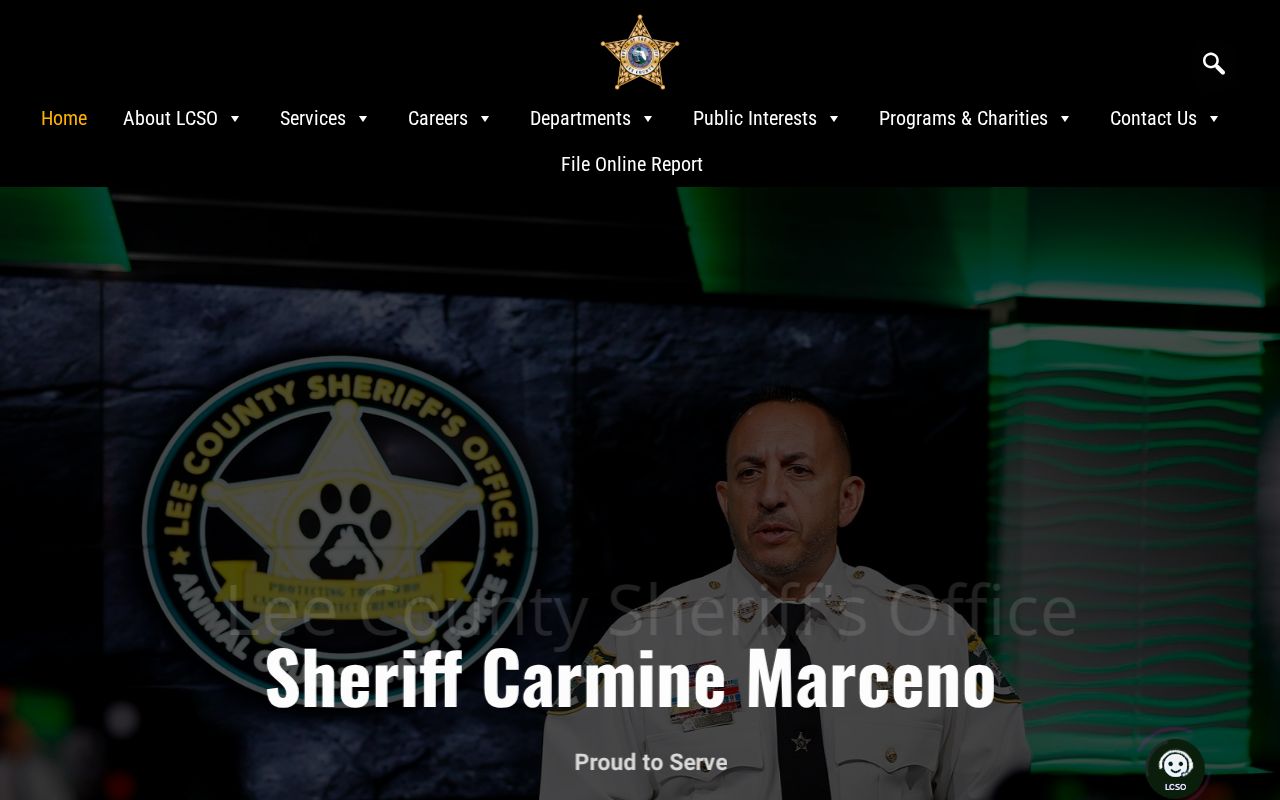
That agency view should be read beside the Clerk outcome, not treated as the final judgment.
Official Florida Background Checks
The FDLE Florida check options include an instant Internet search and certified or non-certified searches returned by mail. Each base search costs $24. The instant product adds a $1 card-processing fee. It is a public name search, not a fingerprint-confirmed identity check, and a possible-match list can charge separately for each selected candidate.
For personal review, a fingerprint route is more reliable. FDLE-approved LiveScan providers and local law enforcement take prints for authorized Florida processes using the requesting agency's ORI number. A person seeking their own national Identity History Summary can use the FBI electronic order portal. Provider prices and appointment rules vary, so confirm them at the official channel.
The FDLE instant search is the statewide name-check entry point.
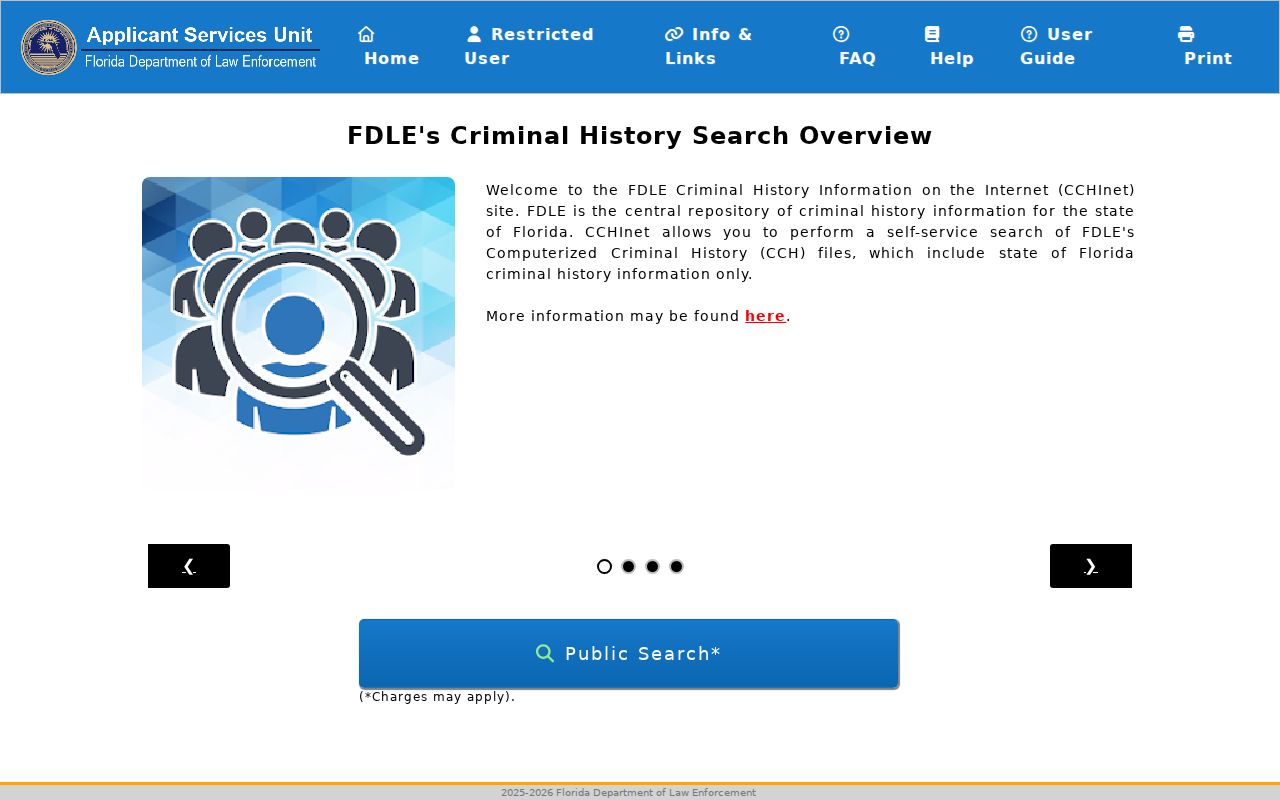
Its result must still be checked against Lee County court records when a disposition is missing or unclear.
The FDLE Criminal History Records gateway separates public searches, personal review, and agency services.
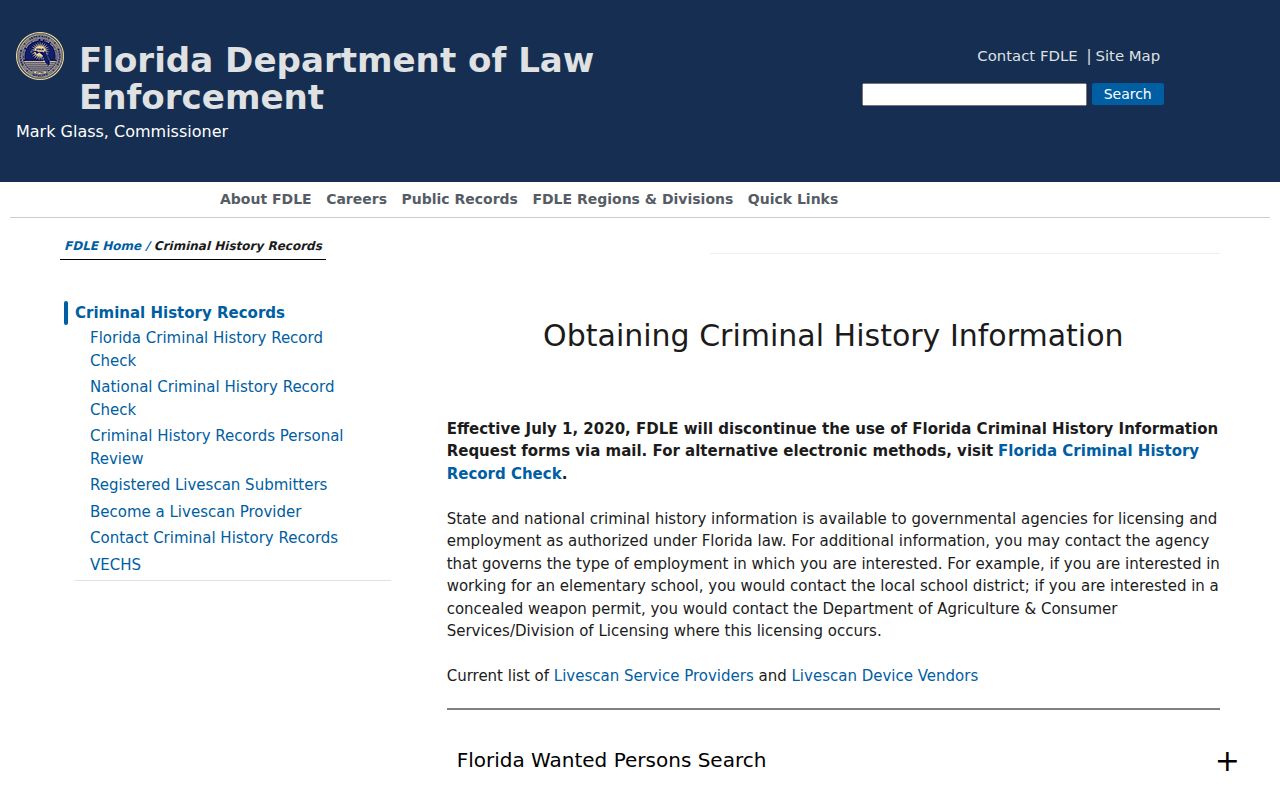
Choosing the right FDLE product prevents a name search from being mistaken for fingerprint-confirmed personal review.
Lee County CRI Search Fields
CRI offers separate paths for case number, party name, date and case type, and court calendars. Party search exposes first, middle, and last name fields plus a date range and case-type control. The system limits results to the first 500 matches. A common surname therefore needs a narrower date or criminal case category.
| Field | Best use | Search note |
|---|---|---|
| Case number | Exact known matter | Accepts local and Uniform Case Number formats |
| Party name | Unknown case number | Use dates and case types to narrow matches |
| Case type | Criminal category | Includes felony, misdemeanor, ordinance, and criminal traffic |
| Court calendar | Hearings | Shows past history and scheduled events |
The Twentieth Judicial Circuit's Lee location page identifies the court site tied to many CRI calendar entries.
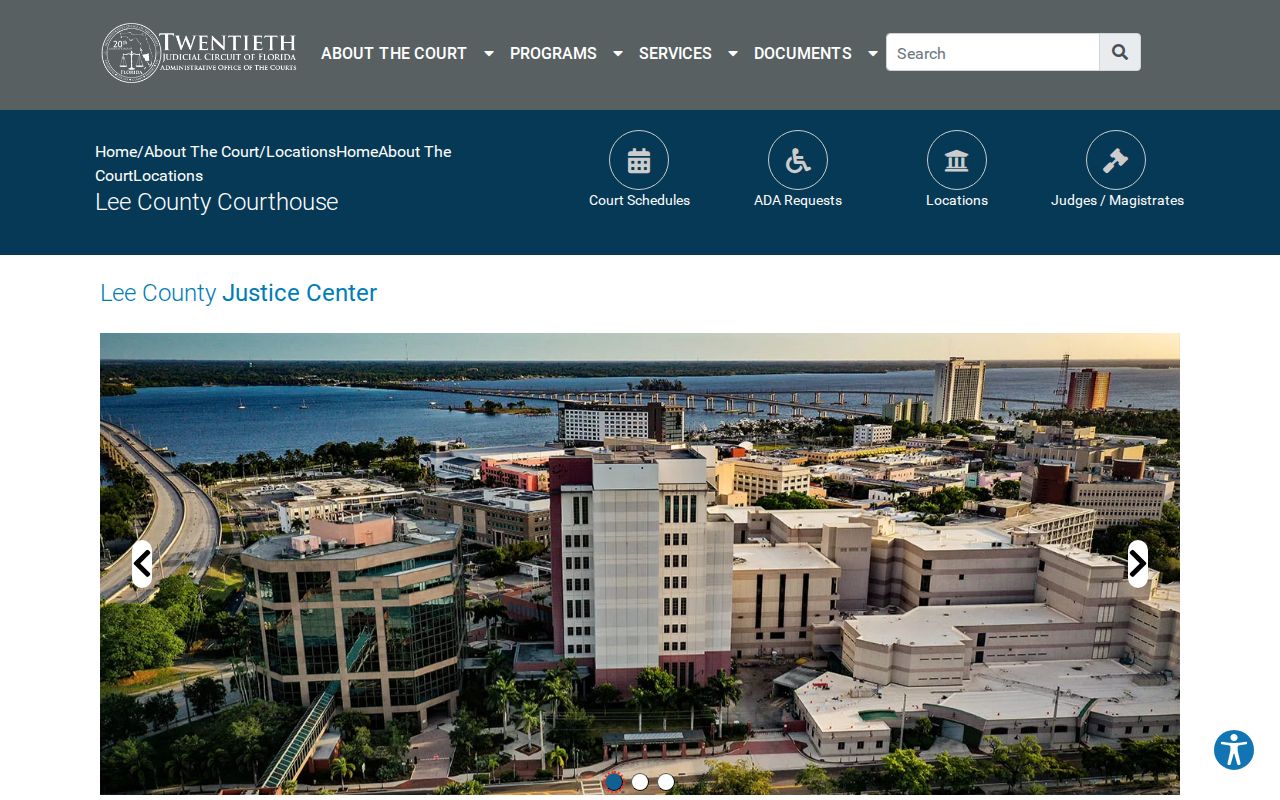
CRI remains the record search, while the court location page controls current building and security details.
Types of Criminal Records
Each Lee County custodian creates a record for its own part of the process. An incident report describes an agency response. A booking record describes custody. A charging instrument states what prosecutors chose to pursue. A court file documents what the judge and parties did.
- Incident and arrest report: held by LCSO, Cape Coral Police, Fort Myers Police, or another creating agency.
- Booking record: created by LCSO intake with custody, charge, bond, and release fields.
- Court case file: maintained by the Lee Clerk with filings, events, disposition, and sentence.
- FDLE history: a statewide repository record built from arrest cycles and reported outcomes.
- Corrections or registry file: a focused record of state custody, supervision, or registration.
A focused lookup begins by naming the record, not just the person.
Warrants, probation entries, and registry profiles are narrower still. A judge issues a warrant, while law enforcement tracks service. State felony supervision may appear through FDC, but locally assigned county probation and Pretrial Services use separate Lee County channels. The Florida Sexual Offenders and Predators Search is a public registration system, not a full criminal history. Its address and status information should never be read as a substitute for the qualifying case file.
Lee County Central Records Fallback
LCSO Central Records is the fallback for sheriff incident and crash reports that do not appear in a public search. Requests can go through the GovQA public-record portal, by phone, or at headquarters. Useful request details include the incident number, date and time, location, agency unit, record type, and a narrow description.
Ordinary paper copies cost $0.15 per page. A victim or involved crash party may submit government identification for a fee waiver. Large requests can draw an extensive-use charge, estimate, and deposit under Florida law. Crash reports also carry a 60-day protection period for general disclosure, while defined involved parties and representatives may obtain access when eligible.
| Channel | Published rule |
|---|---|
| Paper copy | $0.15 per page |
| Victim or involved crash party | Waiver with government ID |
| Extensive request | Estimate and special service charge may apply |
| Delivery | Pickup or mail with payment and return envelope |
What a Lee County Criminal Record Shows
A Florida rap sheet can begin with legal names, aliases, birth details, descriptive identifiers, a state identification number, and an FBI number when assigned. Each arrest cycle may list the agency, arrest date, charge, statute, tracking number, and booking identifier. Reported court data may add the filed charge, adjudication, sentence, and supervision.
| Name and identifiers | Names, aliases, demographic details, and fingerprint-linked numbers |
|---|---|
| Arrest data | Date, agency, booking identifier, and arrest charge |
| Court charge | Filed offense, degree, statute, and count |
| Disposition | Dismissal, nolle prosequi, acquittal, withheld adjudication, or guilt |
| Sentence | Custody, probation, fines, restitution, or other ordered terms |
| Status | Jail, prison, release, or state supervision when reported |
A blank disposition is not a conviction. Check the Clerk file for the court result.
- Disposition
- The recorded way a charge ended.
- Nolle prosequi
- The prosecutor's formal decision not to continue a charge.
- Withheld adjudication
- A result in which the court withholds a formal judgment of guilt, though legal effects can remain.
- Capias
- A court command directing an arrest.
Lee County Jail and Prison Lines
LCSO handles county booking, pretrial custody, and local jail information. The official booking interface offers recent booking and release filters as well as name, birth date, booking number, custody status, booking-date, and release-date fields. It is a courtesy database and not a finding of guilt.
The Florida Department of Corrections covers people sentenced to state prison or state community supervision. Its Offender Search uses a name or six-character DC number and does not replace the county jail search. Federal custody belongs in the Bureau of Prisons locator.
The FDC Offender Search shows the state layer.
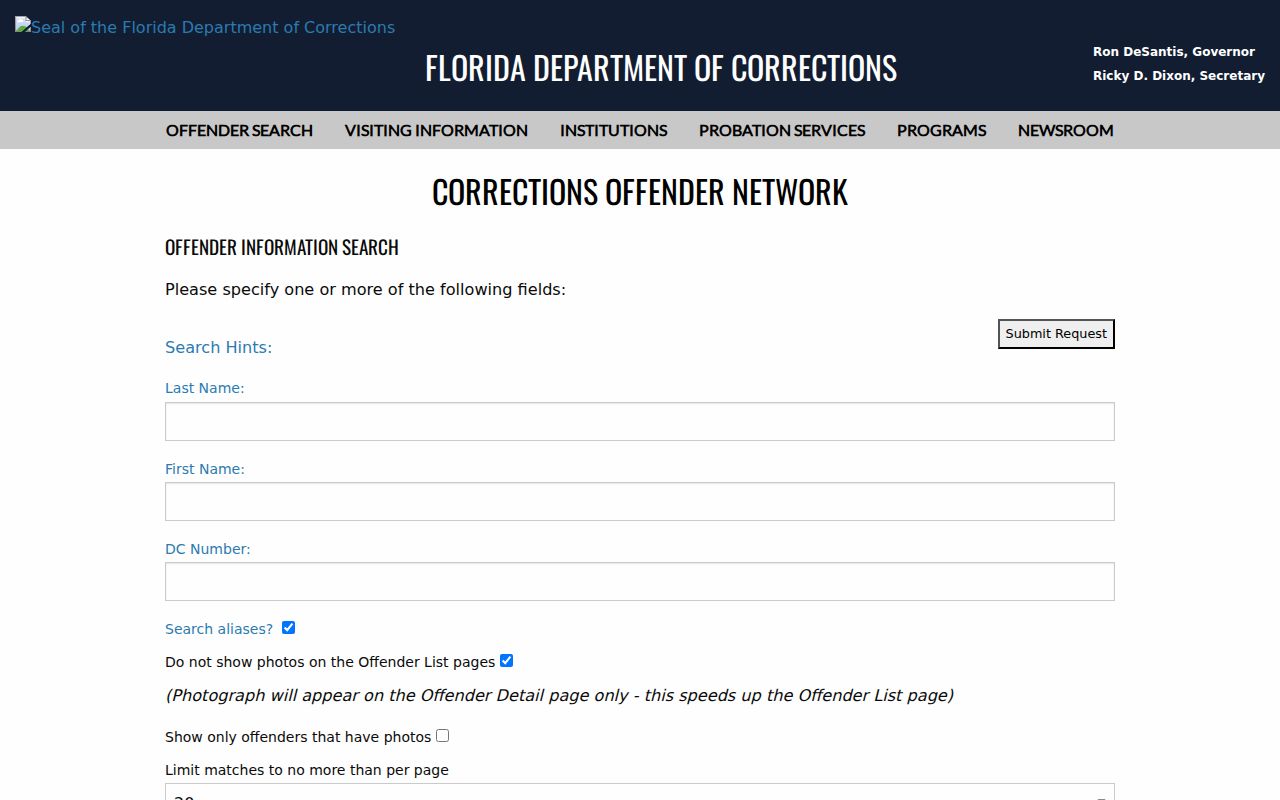
Status and location can change fast, so FDC cautions that recent moves may not yet appear.
Lee County Clerk Copy Routes
A readable docket is not always the same as the copy a reader needs. CRI lets registered users view and print eligible documents at home, while an electronically certified copy costs $8. The Clerk's request system and counter provide ordinary copies at $1 per page and certification at $2 per document. Mail requests go to the Criminal Division at P.O. Box 2507 in Fort Myers.
Older, scanned-only, confidential, or restricted-online material may not open from a search result. Call 239-533-5000 or ask the Clerk which access route fits the document. The hearing itself may occur at the Justice Center, but the customer-service counter is in the Administration East Building. Mixing up those two Fort Myers locations can turn a records visit into a court-security visit.
Public Access Laws
Florida starts with broad access, then applies exemptions to defined information. The Lee Clerk supplies public court dockets and eligible documents. The creating law-enforcement agency handles its own reports. FDLE controls dissemination from the statewide criminal-history repository. Juvenile, sealed, protected-victim, active-investigation, security-sensitive, and confidential judicial information may be withheld or redacted.
Key Florida rules:
Fla. Stat. §119.07 permits inspection and copying of nonexempt public records and authorizes defined charges.
Fla. Stat. §943.053 governs FDLE criminal-history dissemination.
Florida Rule 2.420 governs access and confidentiality for judicial records.
Fla. Stat. §943.0585 controls court-ordered expunction.
Lee County Warrant Search Limits
LCSO does not publish a complete warrant-clearance database. Its Wanted Fugitives page is selective publicity. A personal warrant question should be checked through LCSO nonemergency at 239-477-1000, the Lee Clerk criminal docket, the issuing court, and Central Records. The FDLE Public Access System adds a statewide wanted-person layer but does not make the public the judge of a warrant's current validity.
The FDLE wanted-person search provides that broader state view. No online result authorizes anyone to approach, stop, or detain another person.
The Florida offender registry is a separate public-safety database with name and neighborhood searches.
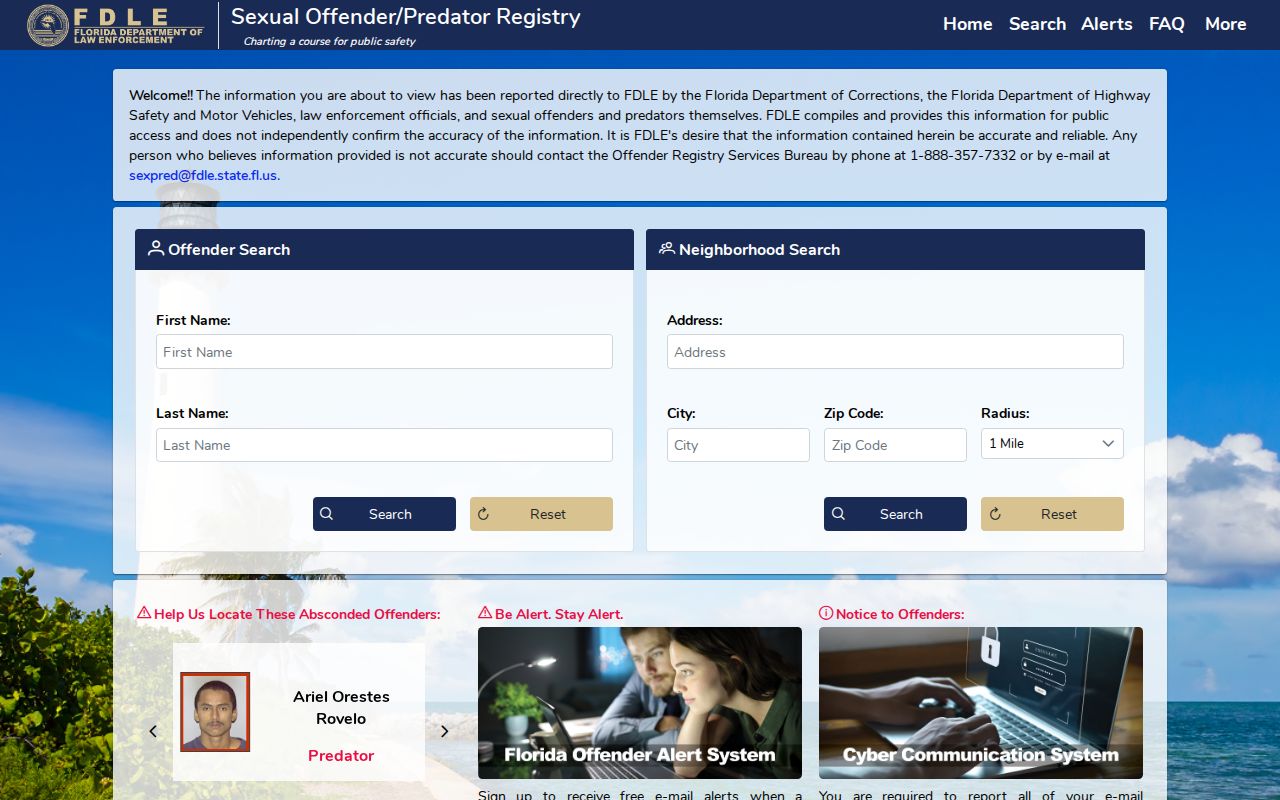
A registry profile concerns statutory registration and is not a warrant result or a complete Lee County criminal history.
Sealed, Expunged & Restricted
Lee County's local relief process begins with an FDLE Certificate of Eligibility. The petitioner then files the certificate, petition, and affidavit in the existing criminal case and pays the Clerk's published $42 filing fee. After processing, the assigned judge's judicial assistant provides hearing details, and a Notice of Hearing must be filed. The Clerk serves the final order through the required agency chain.
Sealing blocks ordinary public access while leaving defined official access. Expunction directs the removal or destruction of eligible material, subject to statutory exceptions and FDLE's confidential notation. Automatic sealing under section 943.0595 may not keep a case out of every search. The Lee Clerk warns that formal relief can still be needed.
Eligibility cannot be inferred from a short docket label. Prior adjudications and listed offenses can bar relief, and the FDLE certificate is not the final court order. The Clerk's forms library supplies the petition, affidavit, notice, and proposed orders. A petitioner should obtain certified dispositions and confirm whether adjudication was entered or withheld before relying on the online summary.
Lee County Cases Before Trial
Not every Lee County docket follows a simple arrest-to-sentence path. Lee Pretrial Services works from the Justice Center's third floor and has earned Excelsior accreditation through repeated external review. Its records concern release conditions and supervision before the case has been decided.
The Veterans Treatment Court is a named local problem-solving program with a published recurring calendar and referral route. Participation does not erase the court file by itself. It can, however, explain docket entries and case movement that make little sense when read as a standard prosecution.
The State Attorney for the Twentieth Judicial Circuit makes filing decisions in Lee County.
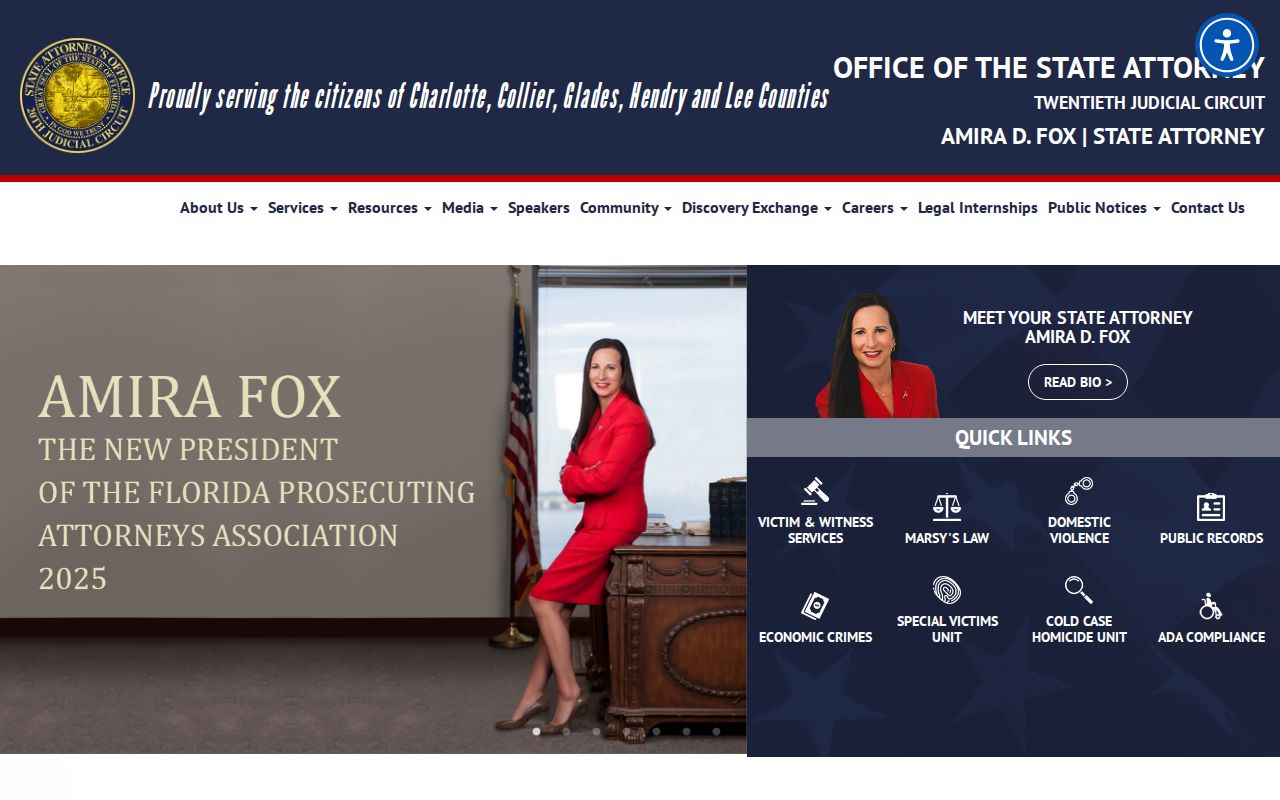
That charging step separates the officer's booking label from the offense ultimately prosecuted.
Criminal Records by City in Lee County
Lee County's three largest incorporated cities use different front doors. Cape Coral and Fort Myers have city police departments that keep their own incident reports, while custody normally moves into LCSO central booking and prosecution into the Lee Clerk docket. Bonita Springs contracts its main law-enforcement service through LCSO, so City Hall is not the custodian for a sheriff report. Florida does not create a separate city criminal docket for these ordinary cases.
Cape Coral Criminal History
233,025 · Cape Coral Police reports route to LCSO booking and the Lee Clerk docket.
Fort Myers Criminal History
99,918 · City police, county booking, and court records have three custodians.
Bonita Springs Criminal History
57,112 · LCSO keeps sheriff reports and bookings; the Clerk keeps court outcomes.