
How to Check Criminal History in Fort Myers
Start with the office that created the record. A Fort Myers Police Department report describes the incident and the officer's action. The Lee County Sheriff's Office booking search covers intake and custody. Lee Clerk Court Records Inquiry, known as CRI, shows charges filed by the State Attorney and how each charge ended. The Florida Department of Law Enforcement adds a statewide public history search when a Lee-only view is too narrow. These sources answer different questions, so a complete check often uses more than one.
- Use the Fort Myers Police Department channel for a city incident or arrest report.
- Give a tight date range, location, report number if known, and the delivery format in the city request.
- Search LCSO Arrest Search for the county booking and current custody status.
- Open Lee Clerk CRI to read filed charges, events, disposition, and sentence.
- Use the FDLE Instant Florida Criminal History Search for a statewide public name search.
Match records with more than a name. Compare middle names, dates, case numbers, and the arresting agency before treating entries as one person's history. The statewide FDLE product is name-based and costs $24 plus a $1 card-processing fee, so it is not the first tool needed for a single local event.
Three Fort Myers Record Custodians
Downtown geography can mislead a records requester. Hearings for many Fort Myers criminal cases take place at the Lee County Justice Center, 1700 Monroe Street. The clerk's public customer-service counter is instead at 2075 Dr. Martin Luther King Jr. Boulevard. LCSO Central Records sits farther south at 14750 Six Mile Cypress Parkway. Walking into the courtroom building does not turn that counter into the custodian for city police reports or sheriff files.
Fort Myers City Clerk
2200 Second Street
Fort Myers, FL 33901
239-321-7035
Monday-Friday, 8 a.m.-5 p.m.
Lee Clerk Records
2075 Dr. Martin Luther King Jr. Boulevard
Fort Myers, FL
239-533-5000
LCSO Central Records
14750 Six Mile Cypress Parkway
Fort Myers, FL 33912
239-477-1350
Use the city for Fort Myers government and police material, the clerk for the filed case, and LCSO for sheriff reports or booking records. That routing saves a trip and keeps a request from landing with an office that cannot fulfill it.
The Fort Myers Police Department
Fort Myers Police owns reports created by its officers. The city's Transparency Portal routes public-record requests, and Public Records Manager John Paul Gravitt can be reached at 239-321-7042 or jgravitt@fortmyers.gov. A useful request identifies the police department, event date and time range, location, report number, requested format, delivery method, and a clear description. Uploads can support the request when they help identify the event.
City Resolution 2024-76 sets paper copies at $0.15 for one-sided pages, with another $0.05 for a double-sided copy. Certification is $1 per page. Media and shipping are charged at actual cost. When search, review, redaction, or preparation takes more than 30 minutes of extensive staff or technology work, the city may assess a special-service charge. Call police nonemergency at 239-321-7700 for an operational question, but use the records route for a copy.
Fort Myers Report Request Fields
A narrow request moves faster than a broad demand for every record tied to a name. Fort Myers request fields allow the custodian to locate one incident, estimate redaction work, and return the file in the format the requester can use.
| Request detail | Why it helps |
|---|---|
| Department and report number | Points staff to the police file rather than another city office. |
| Date, time, and location | Separates events with similar names or facts. |
| Record description | Defines whether the request seeks a report, audio, video, or another item. |
| Format and delivery | Supports an accurate cost estimate and release method. |
Some lines may still be withheld. Active-investigation details, juvenile material, confidential victim information, personal identifiers, and security-sensitive content can be redacted under Florida law.
Arrests and Bookings in Fort Myers
An FMPD arrest produces a city police report, but the county booking belongs to LCSO. The Main Jail and central booking complex are in Fort Myers, and the official arrest search can be filtered by first, middle, and last name, date of birth, booking number, custody status, booking dates, and release dates. Results identify the person shown, date of birth, booking number, and status.
A booking charge remains an allegation. LCSO states that its database describes arrest or detention circumstances and is not a finding of guilt, innocence, acquittal, or dismissal. If a recent Fort Myers arrest is absent, allow for intake delay, check spelling, and call Corrections at 239-477-1700. Then use CRI to see whether prosecutors filed a case. The broader Lee County arrest history route covers county booking and report channels in more depth.
Note: A release from jail does not show that the filed charge was dismissed; only the court docket supplies that outcome.
Fort Myers Incident to Disposition
The first headline charge can change. An officer records the suspected offense, LCSO books the person, the State Attorney decides what to file, and the court resolves each filed count. Searchers who stop at the booking entry miss later charging decisions and the final disposition.
City case path: FMPD incident › LCSO booking › State Attorney filing decision › Lee Clerk docket › FDLE disposition update.
In CRI, look for the case number, filing date, charge description and degree, statute, status, docket events, hearing entries, disposition, sentence, and financial assessments. “Nolle prosequi” means the prosecutor formally chose not to continue a charge. A dismissal also ends a count without a conviction. Neither term should be collapsed into the original arrest allegation.
Fort Myers Arrest Location Clues
Knowing only that an arrest occurred downtown does not identify the report custodian. FMPD, LCSO, court security, or another authorized agency may have acted within the same core. Start with the booking entry and note the arresting agency. That field points back to the office most likely to hold the incident or probable-cause report.
If the booking search has not posted the event, call LCSO and give the approximate time, location, and full name. Once a prosecution appears, the CRI case number becomes the best key for court copies. A federal arrest is different again: matters filed in the Middle District of Florida use the federal docket and do not appear merely because someone searched Lee Clerk.
Fort Myers Municipal Court Records
Fort Myers does not operate a separate municipal criminal court for ordinary misdemeanor prosecutions. Lee County Court handles misdemeanors, criminal traffic matters, and ordinance cases within its jurisdiction. Circuit Court handles felonies. Searchers should use Lee Clerk CRI rather than look for a separate city criminal docket.
| Court Name | Lee County Court for misdemeanors and related lower-level matters; Circuit Court for felonies |
|---|---|
| Case Types Heard | Misdemeanor, criminal traffic, ordinance, and felony prosecutions according to jurisdiction |
| Case Lookup Channel | Lee Clerk CRI, clerk counter, focused records request, or mail |
| What the Docket Shows | Filed charges, events, hearings, status, disposition, sentence, and eligible documents |
| Copies & Fees | $8 electronic certification in CRI; $1 per page and $2 certification through request or counter channels |
Registered CRI users may view and print eligible documents at home without a non-certified copy charge. If an older or restricted-online file is unclear, call 239-533-5000 or mail the Criminal Division at P.O. Box 2507, Fort Myers, FL 33902.
Fort Myers Court Program Clues
The Justice Center also anchors programs that can appear in Fort Myers case events. Lee County Pretrial Services operates on the third floor, while the circuit's Veterans Treatment Court uses Courtroom 5B. A program reference in a docket is not a separate criminal record. It is one event within the clerk-maintained case.
- Pretrial services
- Supervision and court-support functions that may apply before disposition.
- Disposition
- The recorded outcome of a filed charge.
- Adjudication withheld
- A court result that withholds a formal judgment of guilt and must not be described as an ordinary conviction.
Program eligibility and current court assignments can change. Use the docket and official program page together, and do not infer an outcome merely from a referral or calendar entry.
Where Fort Myers Records End Up
FMPD keeps the incident report, but the related prosecution leaves the city records system. LCSO creates the booking record. The State Attorney for the Twentieth Judicial Circuit decides which charges to file, and the clerk records the court result. Arrest fingerprints and reported dispositions then feed Florida Department of Law Enforcement Criminal Justice Information Services.
Record flow: Fort Myers Police Department › Lee County Courts › Florida Department of Law Enforcement
For recent activity, begin with FMPD and LCSO. For an outcome, move to CRI. Use FDLE when the question concerns statewide public history rather than one Fort Myers event. The Lee County criminal court case file is the controlling local source for the filed charge and disposition.
Fort Myers County-Seat Record Geography
Fort Myers concentrates city police, county courts, the clerk, the State Attorney, Public Defender, and central booking in one urban area, but the agencies remain distinct. That concentration explains why a Fort Myers address appears on many county records without making the record a city file. The custodian follows the agency and record type, not merely the mailing city.
The city reported 304 police officers, 4,068 physical arrests, and five substations in its FY2023 annual report. Those are dated operational figures, not current crime rates. They show the scale of city police work while reinforcing why report requests need a date, location, and report number whenever possible.
County-seat status also brings state and federal offices into the same street grid. Their presence does not broaden the Fort Myers city portal. A State Attorney file, federal docket, and city police report remain separate records with separate access rules.
The successful manifest image comes from the official Fort Myers city website.
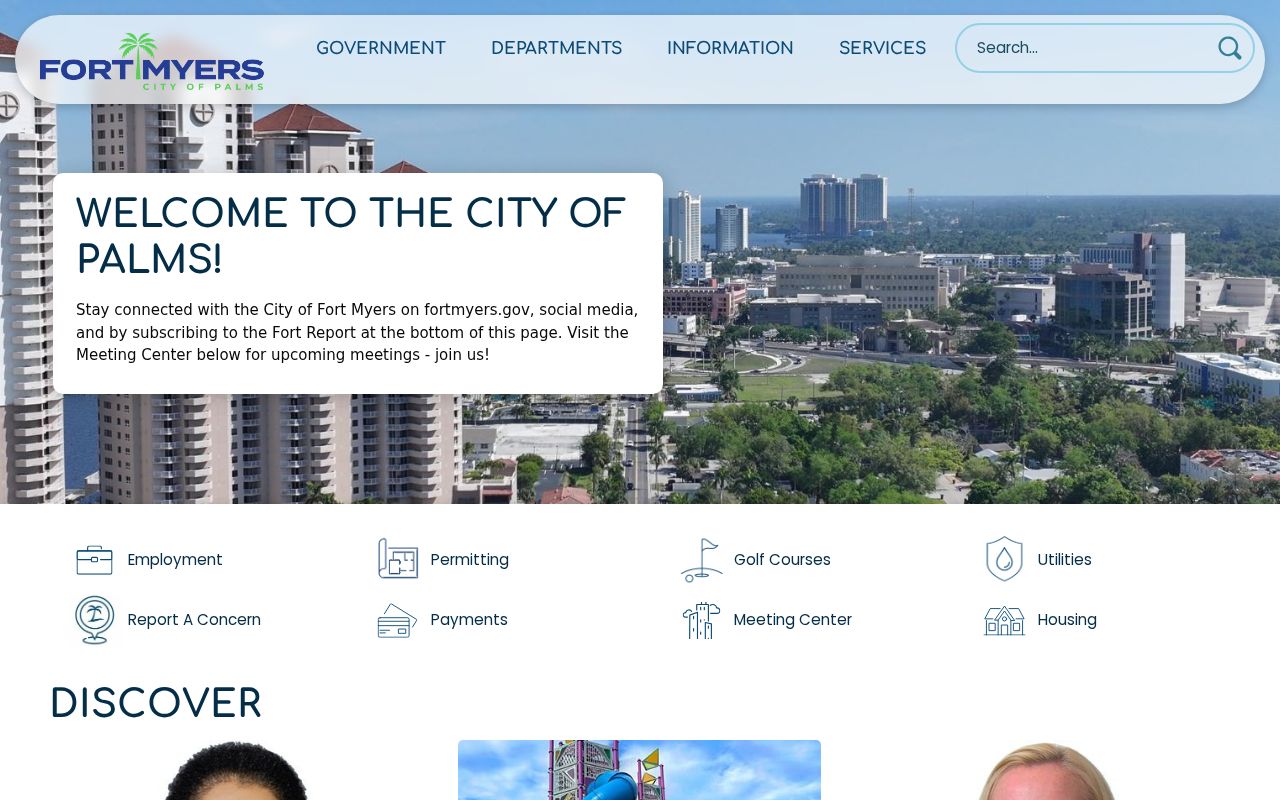
The city source is a useful front door for municipal records, while police, booking, and court custodians still control their own files.
Public Access Rules for Fort Myers Records
Florida starts with broad access to nonexempt public records, but it does not require Fort Myers to release every line in every police file. Active investigative material, juvenile records, protected victim information, personal identifiers, and security-sensitive content may be withheld or redacted. Court confidentiality follows a separate judicial rule, and sealed or expunged material does not appear in an ordinary public search.
Key Statutes:
Fla. Stat. §119.07 permits inspection and copying of nonexempt records and allows ordinary and extensive-use charges.
Florida Constitution art. I, §24 establishes public access while recognizing exemptions created by law.
Fla. Stat. §943.053 governs FDLE dissemination of criminal-history information.
Florida Rule 2.420 controls access and confidentiality in court records.
Public access shows what an office recorded. It does not prove that an allegation was true. Read the disposition beside the charge, and ask the originating office for correction procedures when a file appears incomplete.